
How to Socialize a Litter of Puppies Before They Go to Their New Homes
The first eight weeks of a puppy’s life shape its whole temperament. For breeders, delivering confident, bold and adaptable pups to their new owners is the ultimate mark of quality. A well-socialized puppy grows into a fearless hunting companion and a calm dog at home. Good socialization isn’t about overwhelming puppies; it’s about steady, positive exposure to the world, a little at a time.
1. Weeks 1 to 3: Gentle Daily Handling
Even before their eyes open, puppies benefit from being handled. Pick each pup up every day, check its weight, and gently touch its feet, ears and mouth. Many breeders use a short early neurological stimulation routine between days 3 and 16, a few seconds of mild handling exercises once a day. Keep it gentle and brief; the goal is a puppy that is relaxed being touched for the rest of its life.
2. Weeks 3 to 5: New Sounds and Surfaces
As puppies start walking and exploring, give them a richer environment. Add different textures to their pen, like carpet, rubber mats, grass, gravel and a low metal grate, so they learn to walk confidently on anything. Introduce everyday household noises such as the vacuum, radio, dishwasher and pots and pans at a low volume, ideally while they are eating or playing. Save gunfire for later, when each pup’s new owner can follow a careful gunfire introduction.
3. Weeks 5 to 7: Early Bird and Scent Exposure
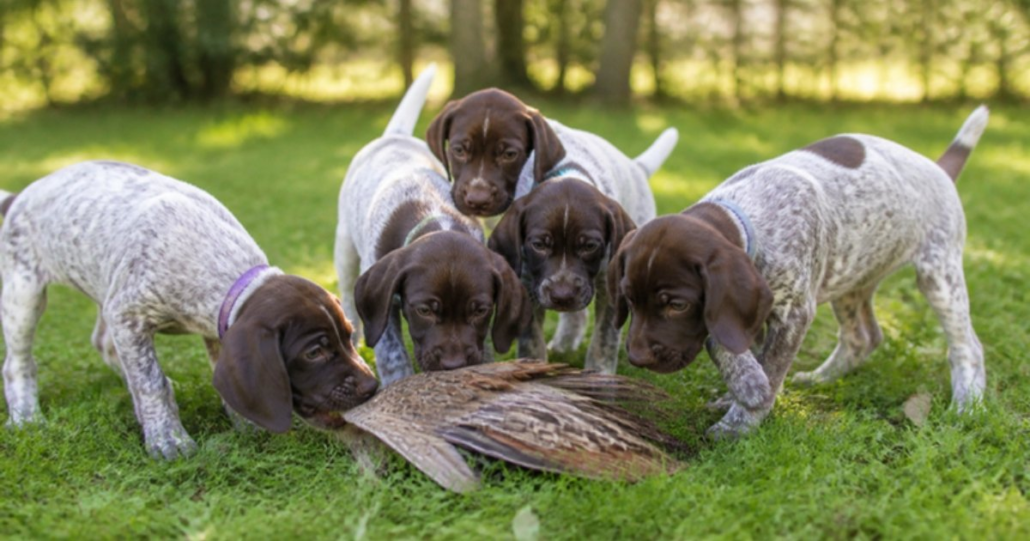
If you breed hunting lines, this is a fun stage. Let the litter investigate a clean bird wing or feathers, and try a wing tied to a fishing pole and string to spark chasing and early pointing instinct. Drag a little scent through the yard and let them follow it. Watch how each pup reacts to cover and movement: who charges in boldly, who hangs back, who points. Those notes will help you match each puppy to the right home.
4. Weeks 6 to 8: New People, Places and Short Separations
Invite calm visitors of different ages to handle the puppies, including children who are supervised. Take pups for short car rides, introduce a crate with the door open, and give each pup a few minutes alone away from its littermates every day. That bit of independence makes the move to a new home much easier. Until puppies are fully vaccinated, keep outings to clean, private places and away from unknown dogs.
5. Keep Notes and Share Them with Buyers
Write down what each puppy has experienced and how it responded. Share that record, and your vet records, with each new owner. Buyers love knowing their pup has had a great start, and it shows the care that goes into your program.
6. Avoid Common Socialization Mistakes
More isn’t always better. Watch each puppy’s body language and give shy pups extra time and quieter experiences instead of forcing them into scary situations. Keep sessions short and end on a happy note, just like any other training. And don’t let the litter sort out every problem with rough play among themselves; regular one-on-one time with people teaches each pup to look to humans for fun and guidance.
7. Line Up Serious Buyers Early
Socializing a litter takes a lot of time and effort, which is why lining up committed buyers early matters so much. Instead of scrambling at the last minute, market your litter well in advance to hunters looking for quality stock.
Ready for the next step? See our guides on housebreaking a new puppy to pass along to your buyers.
List your litter in advance
Connect directly with hunters looking for well-bred, well-started pups. Post your litter on Buy and Sell Hunting Dogs today.









Leave a Reply
Want to join the discussion?Feel free to contribute!