
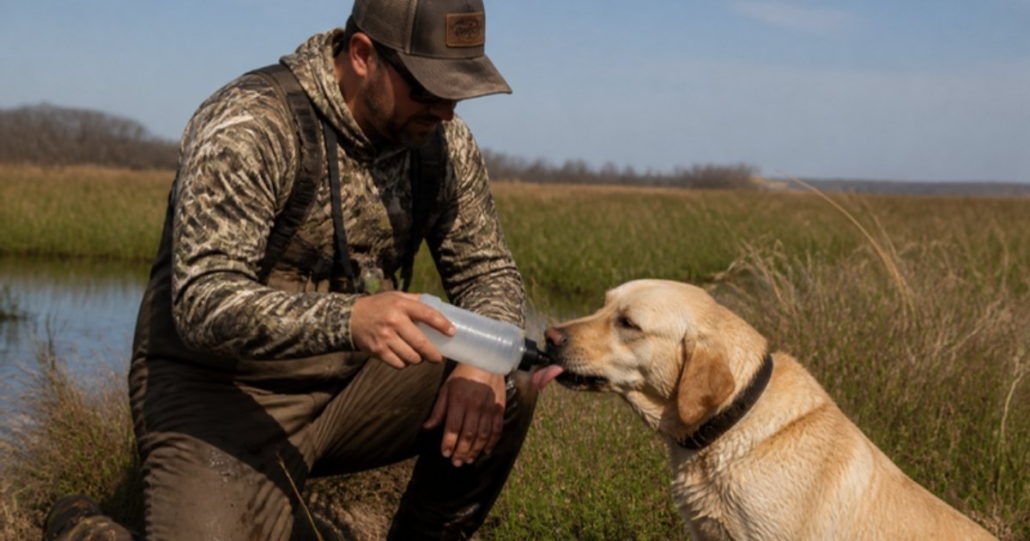
How to Keep Your Dog Hydrated and Safe on Hot Early-Season Hunts
Early teal, dove, grouse and woodcock openers often bring unseasonably warm weather. Hunting dogs give everything they have, and many will keep running right up to the point of heat stroke. Knowing how to prepare, hydrate and spot the warning signs early is one of the most important things you can learn as a dog owner, and it can save your dog’s life.
This guide is general information for hunters, not a substitute for your veterinarian. Heat stroke is an emergency: if you suspect it, start cooling your dog and get to a vet immediately.
1. Get Your Dog Ready Before the Season
A fit dog handles heat far better than an out-of-shape one. Build up your dog’s conditioning through the summer with roading, free-running and swimming, ideally in the cool of the morning so they gradually adjust to warmer temperatures. Keep your dog lean; extra weight holds heat.
2. Hunt Smart on Warm Days
- Hunt early in the morning or late in the evening, and call it a day when temperatures climb.
- Keep hunts short and give your dog frequent rests in the shade.
- Choose cover near water when you can, so your dog can drink and get wet.
- Rotate dogs if you have more than one, so each gets time to cool down.
- Never leave a dog in a closed vehicle, even with the windows cracked.
3. Hydrate Early and Often
Don’t wait for your dog to look thirsty. Offer small amounts of water every 15 to 20 minutes from a squeeze bottle; a dog can drink from the stream without stopping to lap from a bowl. Carry more water than you think you need, at least a liter per dog for a short hunt in the heat, and leave a cooler of water in the truck. A wet dog cools faster, so splashing water on the belly, groin and paws helps too.
4. Know the Signs of Heat Exhaustion
Watch your dog closely. Early warning signs include heavy, frantic panting, a wide, flattened tongue, thick drool, slowing down or seeking shade, and not responding to commands. Stop hunting right away when you see them. Signs of heat stroke are more serious: stumbling or wobbling, confusion, bright red or pale gums, vomiting or diarrhea, collapse or seizures. A dog’s normal temperature is about 101 to 102.5°F; above about 104°F is dangerous.
5. Cool Your Dog Down Safely
Move your dog into the shade and start cooling right away:
- Soak the dog with cool (not ice-cold) water, focusing on the belly, groin, armpits and paws.
- Let air move over the wet coat; a fan or the truck’s air conditioning helps.
- Offer small sips of water, but don’t force a dog to drink.
- If you have a thermometer, stop active cooling at about 103°F so the temperature doesn’t drop too far.
Even if your dog seems to recover, call your vet. Heat stroke can cause internal damage that doesn’t show up right away.
6. Gear That Helps
A squeeze bottle, a collapsible bowl, a cooling vest or wet towel, a rectal thermometer and a dog-specific electrolyte product are inexpensive insurance. Keep them in your vest or truck all season.
With smart planning and close attention, you and your dog can enjoy those warm early-season hunts safely. For other mishaps, see our guide to field first aid for hunting dogs.
Ready for the season?
Find your next bird dog, retriever or hound, or place your own ad on Buy and Sell Hunting Dogs.









Leave a Reply
Want to join the discussion?Feel free to contribute!